logo-2015-v11

Management Lessons from Golf’s Ryder Cup: The Future of High-Performance Teams

Posted by Ron Kfoury Oct 9, 2014 11:27:00 AM on

Ryder Cup History

The Ryder Cup has had a bizarre history. Started by Englishman Samuel Ryder in 1927, it was at first a gloried golf exhibition between a team of the best U.S. golfers and a team of English players that competed every two years for custody of a small gold trophy. For the first 50 years, the Americans dominated the contest with a mind-numbing string of U.S. victories (22 of 25 from 1927 to 1983). By 1979, the golf powers-that-be agreed to use golf-legend Jack Nicklaus’s suggestion to expand the down-trodden English team (which by then had marginally expanded to include the Republic of Ireland and Northern Ireland) to now include all of Europe. “Team Europe” was often depicted by the American press as a rag-tag band of hard-drinking, lower-ranked journeymen golfers, who were impossibly supposed to come together and form a winning team from eight or nine different countries with no common language or culture. It took a few years, but somehow the Europeans started to beat the Americans. Again and again and again.

Read More

Topics: teams, team building, management

6 Common Errors in FMLA Leave Requests that Can Trigger Lawsuits

Posted by Jake Richardson Sep 29, 2014 6:41:00 PM on


The purpose of the Family Medical Leave Act (FMLA) is easy enough to grasp, but common mistakes can lead to costly lawsuits.

7 steps to radically improve time off management  Download Free E-Book Now!

Information and process errors 

  • Not using FMLA request forms. Standardized FMLA request forms better ensure that an employee will provide 100% of the information needed to make an approval decision. Employees should communicate the details of their FMLA request informally before a formal request is made.
  • Not including medical information from doctors. Often the only valid information that can be used to grant FMLA leave is medical information from medical professionals.
  • Not defining the period of incapacity. The request must clearly define the start and end dates of the FMLA leave.
  • Not having a process that allows medical information to be kept private. Many medical conditions might be embarrassing to an employee if know to their supervisor or other employees in the firm.
Read More

Timekeeping and payroll through the ages

Posted by Virginia H. Sep 24, 2014 7:00:00 AM on

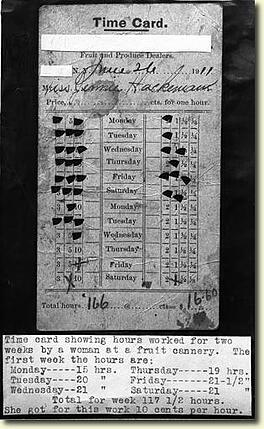
Paying people wages for the work they do is a relatively new concept, historically speaking. Six thousand years ago, slaves fed the animals, plowed the fields and cleaned the house. If a nobleman needed more slaves, enslaved their people. No one needed timesheets because no one got paid.

Read More

Topics: timesheet

Leave accrual rules: how did we get here?

Posted by Virginia H. Jul 17, 2014 11:00:00 AM on


Superpowers would be a welcome gift for managers who have to keep track of employee time off. They could clone three replicas of themselves, one for the calendar year, another for the fiscal year and a third for the employee-anniversary year. They could time-travel from holiday to holiday, magically paying everyone who'd earned holiday pay -- and double time for union workers. They could predict the future and know who would need military leave or protected medical leave, and when.

Read More

Topics: Time Off Management

What You Should Know About Construction Piece work, Rates and the FLSA

Posted by Barbara B. Jun 30, 2014 7:27:00 AM on

Piece work - Not So Simple

With construction piece work, you need to consider many pros and cons between using hourly labor rates and piece work rates in the construction industry. Employers need to look at the benefits and drawbacks while ensuring that the choice they make still falls within the rules of the Fair Labor Standards Act (FLSA).

Employers must understand all aspects of piece work and minimum wage laws to remain in compliance and retain employees. Workers who find that they are not being paid properly are likely to find alternate employment or file suit against the employer.

Read More

Fair Labor Standards Act Compliance: Time & Labor Tracking Then & Now

Posted by Virginia H. Jun 24, 2014 7:00:00 AM on

Federal Labor Standards Act compliance has been a concern of employers since the Act was passed in 1938. But labor rules compliance didn't begin with FLSA compliance. The history of employee time tracking predates the Revolutionary War.

Read More

Topics: payroll, payroll time tracking

Construction Site Staffing: Handling Absences and Same-Day Hires

Posted by Barbara B. Jun 7, 2014 10:40:35 AM on

As a construction site manager or crew leader, you have multiple jobs to perform. You have to ensure that the project is done correctly, on budget and on time. Weather delays are not in your control. However, construction employee absences are costly when it comes to getting the job done and this is in your control.

Read More

Topics: Construction

Five Ways IT Projects Go Wrong and What You Can Do About Them

Posted by Nigel H. Jun 3, 2014 10:54:00 AM on

Few projects have so clearly failed as the spectacularly disastrous Tacoma Narrows Bridge which began galloping like a horse until it completely collapsed on November 7. 1940. By some accounts, Boston's “Big Dig” construction project cost $12 billion more than originally estimated and was completed over five years late. Admittedly, few projects are this big and challenging, yet cost and schedule problems are hardly unusual in large public construction projects. Most IT project problems are less obvious and more subtle, but no less deadly. As every Project Manager (PM) will confirm, managing projects is difficult. In a 2010 study of a decade of IT projects, the influential Standish Group CHAOS report found amazingly that a mere 24% of IT projects were considered a success:

  • Successful: 24%

  • Challenged: (late, over budget, fell short of original requirements) 44%

  • Failed: cancelled or never used 32%

From their study, here are five major ways IT projects go wrong.

Read More

Topics: Projects

Overtime rules: the simple, the complex and the scary!

Posted by Virginia H. May 30, 2014 12:49:00 PM on

Complex employee overtime rules make calculating payroll a challenge. Get it wrong, and your workers don't get the pay they're entitled to. Get it really wrong, and your company can get sued or sanctioned.

With years of experience, payroll managers become familiar with the rules they deal with on a daily basis. But unique state requirements and contract provisions in collective bargaining agreements add layers of complexity to already complex labor rules.

U.S. labor rules

State laws can be more restrictive than U.S.laws,but they can't be less restrictive. In many states, these federal laws are the starting point for more complex overtime rules set by state legislatures:

  • Employers pay workers time and a half after 
Read More

Topics: payroll time tracking

Supervisor Upgrade: Are Your Supervisors Using The Right Tools?

Posted by Virginia H. May 23, 2014 6:00:00 AM on

Before we start, we need to ask: "What makes a great supervisor today?" Here's a working definition: he or she has a set of critical skills that get the strongest performance out of his staff and retains the best employees. He also needs to strive to develop and improve these skills.  

1. Focus on retention. The job market is heating up, and employers are once again competing for top talent. In this environment, supervisors have to always have a handle on who are their best people and make sure they feel challenged and empowered.

Read More

Topics: Employee management

Posts by Tag

see all

Recent Posts